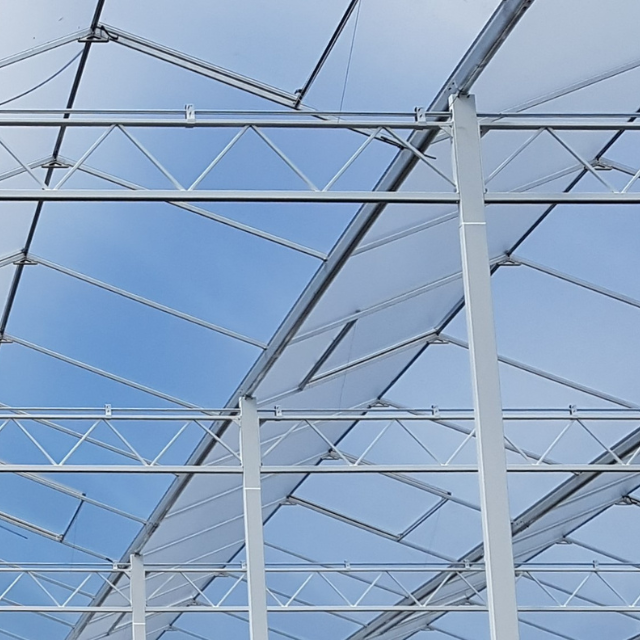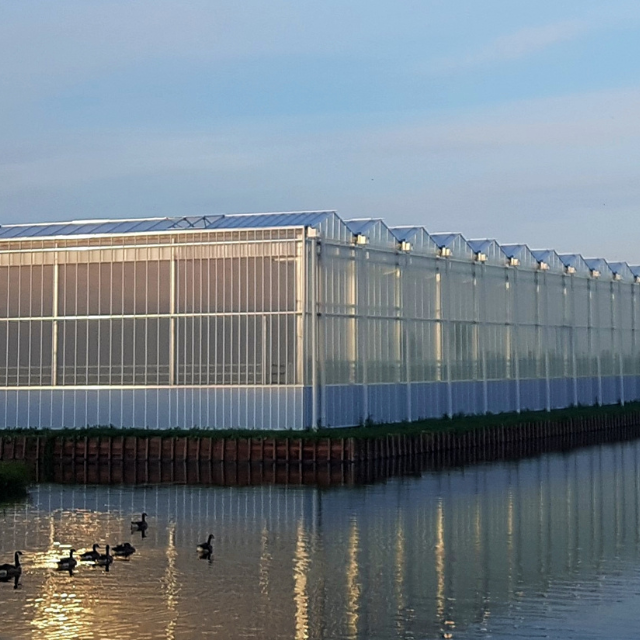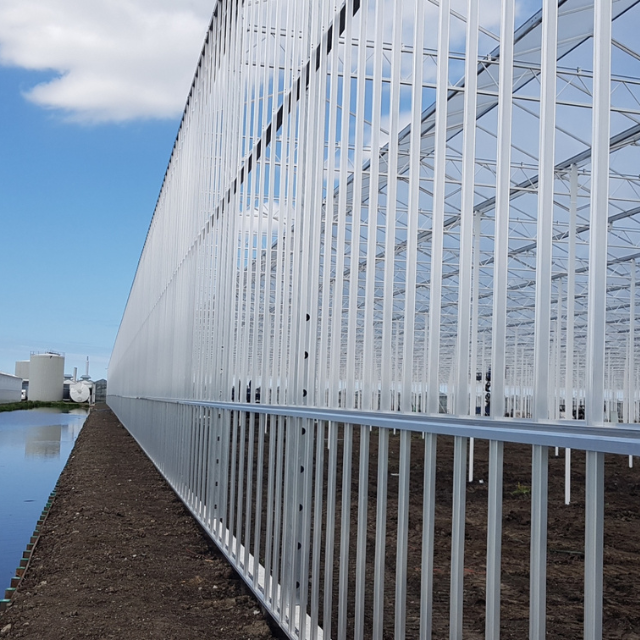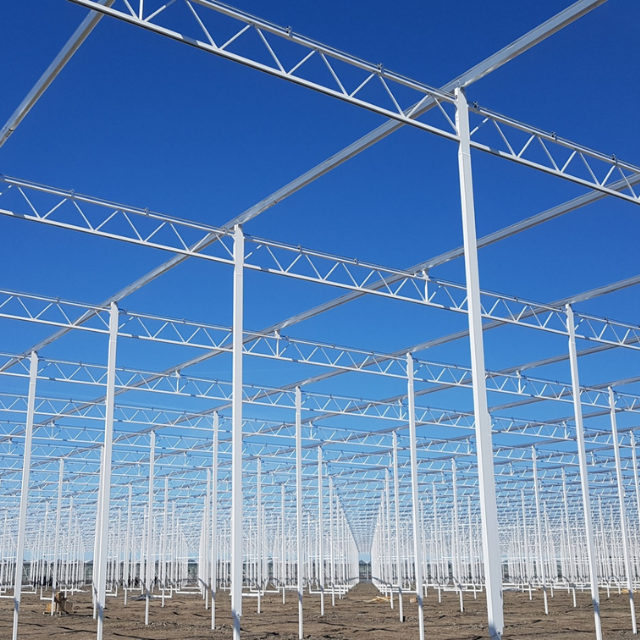

Column Gutter Connection

Storm-proof connection without welding for fast and safe installation.

The Optinova™ roof system is designed for horticultural projects that demand strength, reliability, and efficiency. With a robust construction, optimal light transmission, and a smart, airtight finish, Optinova™ provides a proven solution for challenging climate conditions worldwide.
The Optinova® greenhouse roof system is engineered to deliver maximum stability, safety, and light transmission for modern horticultural greenhouses.
To give a clear and accessible overview of these technical advantages, we have visualized six key system components entirely in 3D.
Each animation demonstrates in detail how our solutions function and why Optinova® is chosen worldwide for durable, storm-proof, and efficiently assembled greenhouse structures.
Storm-proof connection without welding for fast and safe installation.

Foam seal for quick, clean, and fully leak-free gutter connections.

Reliable, durable glass sealing without glass-to-metal contact.

Multiple bar heights for optimal light transmission and crop zones.

Innovative fixing hook for maximum stability during extreme conditions.

Optimal force distribution for a stable and durable ridge construction.
Thanks to reinforced connections and high-quality European materials, Optinova™ withstands wind, snow, and sun. Larger spans and higher loads? No problem. The rigid ridge-roof bar connection and storm-resistant gutter-column construction ensure maximum stability – without any welding.
Contact usThe roof bar-gutter connection closes seamlessly and quickly. Glass is placed on all four sides in PVC, resulting in a reliable seal. Rainwater and condensation are drained separately via the gutter – ready for reuse. This saves costs and is environmentally friendly.
Technology that makes the differenceThese systems are designed with installation ease, low maintenance, and compliance with international horticultural standards in mind.
View our other solutions


Optinova™ is compatible with earlier systems such as Euronova and Alkupro. Expanding or upgrading? Thanks to the wide range of profiles, you can easily connect to existing greenhouses, in line with current greenhouse construction standards.
The specially shaped gutter minimizes light obstruction. Combined with adapted roof bars and roof heights, the system can be fully tailored to your client’s cultivation needs. Each Optinova™ system is calculated, engineered, and manufactured to measure – including project engineering via TNO’s ‘Glazenstad’.
Why choose Optinova™?
The choice of a greenhouse roof system is closely linked to the type of covering material used. Common options include glass, polycarbonate, and sandwich panels, each with specific properties in terms of light transmission, insulation performance, and weight.
Below, we answer frequently asked questions about greenhouse roof systems and the differences between these materials.
Various materials are used for greenhouse roof systems, including glass, polycarbonate sheets, sandwich panels, and insulated panels.
The choice of material influences factors such as light transmission, thermal insulation, and roof weight, which in turn affect the overall performance of the greenhouse.
Glass is known for its high light transmission and long service life, while polycarbonate offers better insulation and higher impact resistance.
Polycarbonate is lighter and more resistant to extreme conditions, but generally transmits slightly less light than glass.
Sandwich panels are used when insulation is more important than light transmission.
They consist of multiple layers with an insulating core and are not transparent, making them suitable for processing areas, technical rooms, or sections of the greenhouse where no natural light is required.
Insulated panels reduce heat loss and help maintain a more stable internal climate.
This makes them suitable for applications where energy efficiency is essential, such as in colder climates or in spaces with specific climate control requirements.
A polycarbonate greenhouse roof system uses plastic sheets with a multi-wall structure.
These sheets provide a good balance between light transmission and insulation and are often applied in situations where additional protection against weather conditions or temperature fluctuations is required.
A twin-wall (multi-wall) system consists of double- or multi-layer sheets with air cavities.
These air layers provide additional insulation while still allowing light transmission. This type of system is often used when energy efficiency and diffuse light are important factors.
Yes, greenhouse roof systems can be designed to support the integration of solar panels.
It is important that the structure is engineered to account for additional loads, such as the weight of the panels as well as external loads like snow and wind, to ensure safety and stability.
The right choice depends on the crop, climate conditions, and desired energy consumption.
Factors such as light requirements, insulation, maintenance, and structural load capacity all play an important role. In many cases, a combination of materials is used within one greenhouse to support different functional areas.
Yes, it is possible to combine different covering materials within a single greenhouse.
For example, glass roof sections can be combined with sandwich panels or insulated panels to create specific zones, such as cultivation areas and processing areas.